🚀 𝗜𝗻𝗶𝘁 & 𝗦𝗶𝗱𝗲𝗰𝗮𝗿 𝗖𝗼𝗻𝘁𝗮𝗶𝗻𝗲𝗿𝘀: 𝗧𝗵𝗲 𝗨𝗻𝘀𝘂𝗻𝗴 𝗛𝗲𝗿𝗼𝗲𝘀 𝗼𝗳 𝗞𝘂𝗯𝗲𝗿𝗻𝗲𝘁𝗲𝘀 🛠️
Kubernetes
Init Containers vs Sidecar Containers: The Unsung Heroes of Cloud-Native Apps
When running microservices in production, it’s not just about getting your app to run—it’s about ensuring it runs reliably, securely, and at scale. That’s where two Kubernetes patterns—Init Containers and Sidecar Containers—come in.
Both play different but equally important roles in making your applications production-ready. Let’s break them down. 👇
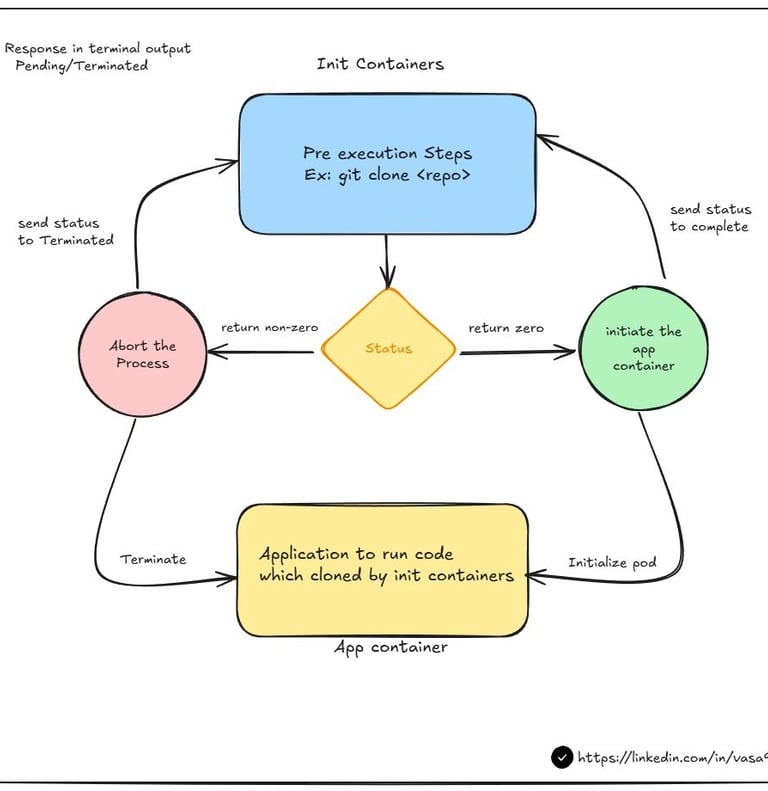
🚀 Init Containers: Your App’s Pre-Flight Checklist
Before your main application container even starts, init containers prepare the environment. Think of them as the ground crew making sure everything is ready before takeoff.
Some common use cases include:
🔐 Fetching secrets from Vault or AWS Secrets Manager
🧪 Running database migrations safely before the app starts
⚙️ Setting up configuration files or waiting for dependent services
With init containers, you can guarantee that your app always starts in the right state, avoiding crashes and race conditions.
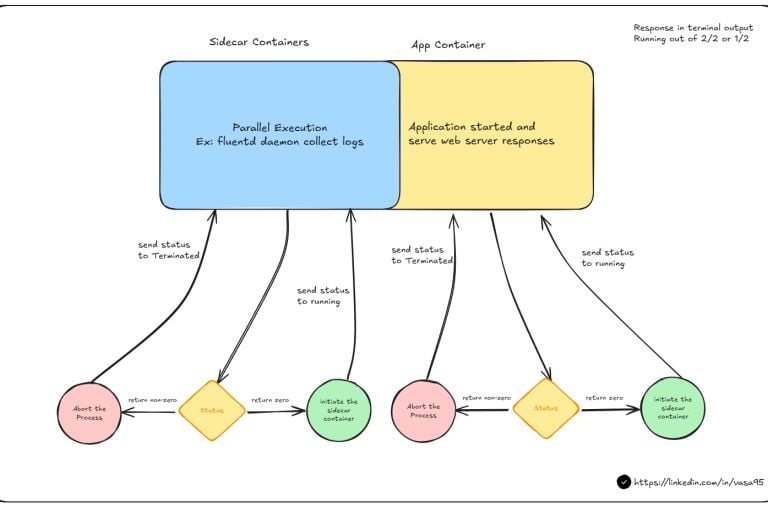
🛡️ Sidecar Containers: Superpowers Without Touching Your Code
While init containers handle setup, sidecar containers run alongside your main container—giving your app extra capabilities without requiring code changes.
Typical sidecar use cases:
📊 Log collection (e.g., Fluentd, Promtail)
🕵️ Service mesh proxies (e.g., Envoy, Istio)
🔁 Automatic token refreshers or config reloaders
This approach lets you add observability, networking, and security as separate concerns instead of baking them directly into your app logic. That’s clean architecture at work.
🧠 Why This Matters
In real-world deployments, init and sidecar containers aren’t just nice-to-haves—they’re what make cloud-native applications:
✅ Resilient: Fail-safe startups and restarts
✅ Modular: Decoupled responsibilities
✅ Production-ready: Following best practices instead of hacks
Without these patterns, teams often end up hardcoding logic, bloating container images, or introducing operational risks.
💡 Takeaway
If you’re building cloud-native systems or running workloads in Kubernetes, init and sidecar containers aren’t optional—they’re best practices that will make your apps more stable, secure, and scalable.
📖 Want to dive deeper?